
Research & Development · NASGO-ABC · Artificial Brain Concept
We are building the software for an artificial brain.
Many specialised synapses work together, check each other and stay traceable. The human sets the goal and decides.
Synapse running todayCluster running todayBrain in developmentClick a centre of the brain.
The principle comes first
NASGO-ABC only works if the collaboration between humans and AI gives people more than they would have without it. Otherwise the system makes another offer or does not work.
Only if it helps →The brain grows in three stages
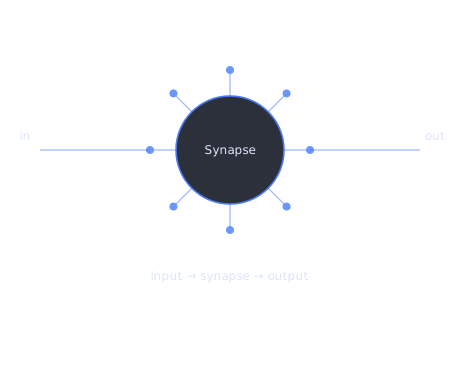
1 · Synapse
A language model with exactly one task. It accepts an assignment, delivers the result and records every step so that it can be checked.
running today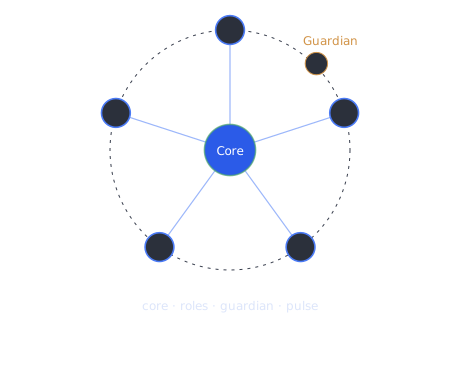
2 · Cluster
Synapses share the work: a core organises, roles do the work, a guardian checks every result.
running today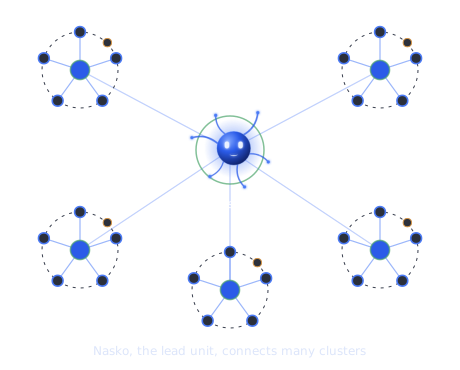
3 · Brain
A lead unit connects many clusters, pools their knowledge and checks the whole. The human remains the team lead.
in developmentWhat you will find here
How you work with NASGO-ABC
A counterpart you understand. Processes you can see. A server of your own.
Working with NASGO-ABC →A brain in three layers
Neocortex, cortex, cerebellum: who thinks, who acts, who experiments.
The brain →Three thinking tools
Functionative, structurative, generative: how the machines tick.
Thinking tools →Research in progress: the early results are encouraging. Whether and when the whole brain holds up is what we are investigating, and we label every status. Current status →
Outlook: we are currently investigating how an artificial brain can observe itself. We will publish the results under Science.
Principle
Only if it helps people.
Every collaboration begins with a check: does it give people more than they would achieve without AI? The calculation is not just for the individual, but for people as a whole.
Why so strict?
A system that goes along with everything is a tool for any purpose. NASGO-ABC checks beforehand whether a collaboration would harm people. If so, it offers something else or declines.
Where this is anchored
The principle is being anchored early in the system, not as a request in the task text. Every synapse is meant to work within this boundary.
principleroll-out in the system under wayWorking with NASGO-ABC
A counterpart you understand.
What you know when you work with NASGO-ABC: how the system meets you, what you can see and where your data is kept.
Surface
The generative front end: this is how the system appears to you. We call it Humboldt 2, and it adapts to what you are doing at the moment.
Humboldt 2 in progressGate
All processes are meant to be visible and understandable from the result: you should be able to see what happened and why.
principleRealities
Your privacy is meant to be protected: every package is to come with a server of its own, which the system manages and runs on, depending on the hardware also on your premises.
server runningpackages with server plannedPrivate synapses
Synapses with local language models: sensitive work is meant to stay within your organisation.
in progressConnected networks
The idea: pool computing load in local networks and distribute it anonymously, only with the consent of everyone involved.
visionThe brain
A brain in three layers.
Modelled on the human brain, each layer has its task: one thinks and holds the goal, another acts with tools, the third experiments and protects what is private.
- Mind, telos (the goal), language, being
- Logic, mathematics and statistics
- Three thinking tools: functionative, structurative, generative
in developmentfull stage: research goal Thinking tools →
- Many tools in one shared class (SMART)
- Learns and corrects itself
- Data, bias and measurement: what is, how skewed, how precise
in progress
- Experimental space: trying out new things
- Test space: checking before it counts
- Private space: what belongs to you stays with you
test spaces built
Thinking tools of the neocortex
How the machines tick.
Three tools organise the thinking. Every term in the pictures has a precise meaning; together they show how a task is steered, structured and generated.
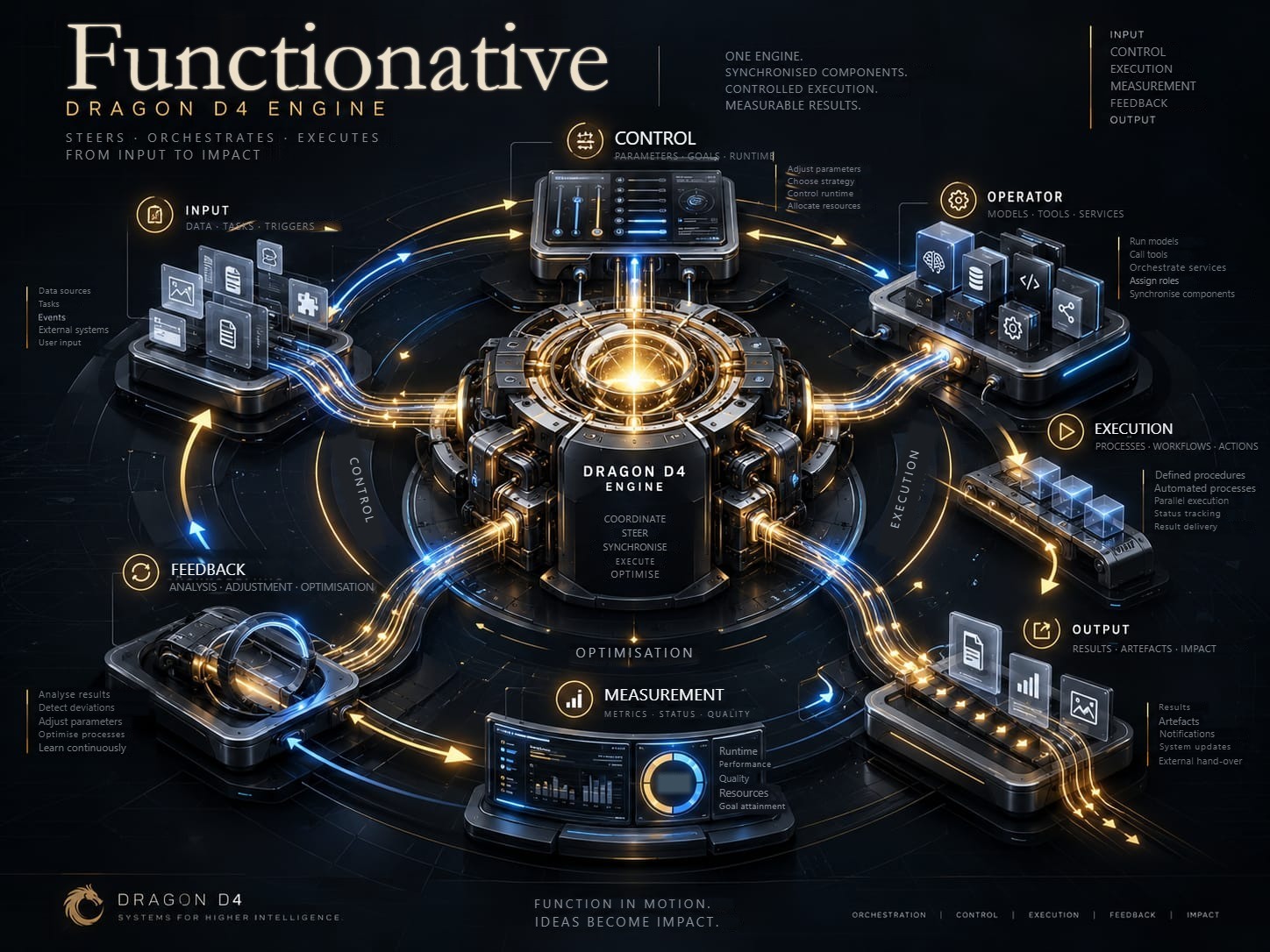
Functionative
Dragon D4 Engine: steers, orchestrates, executes. From input to effect.
proven in useView →
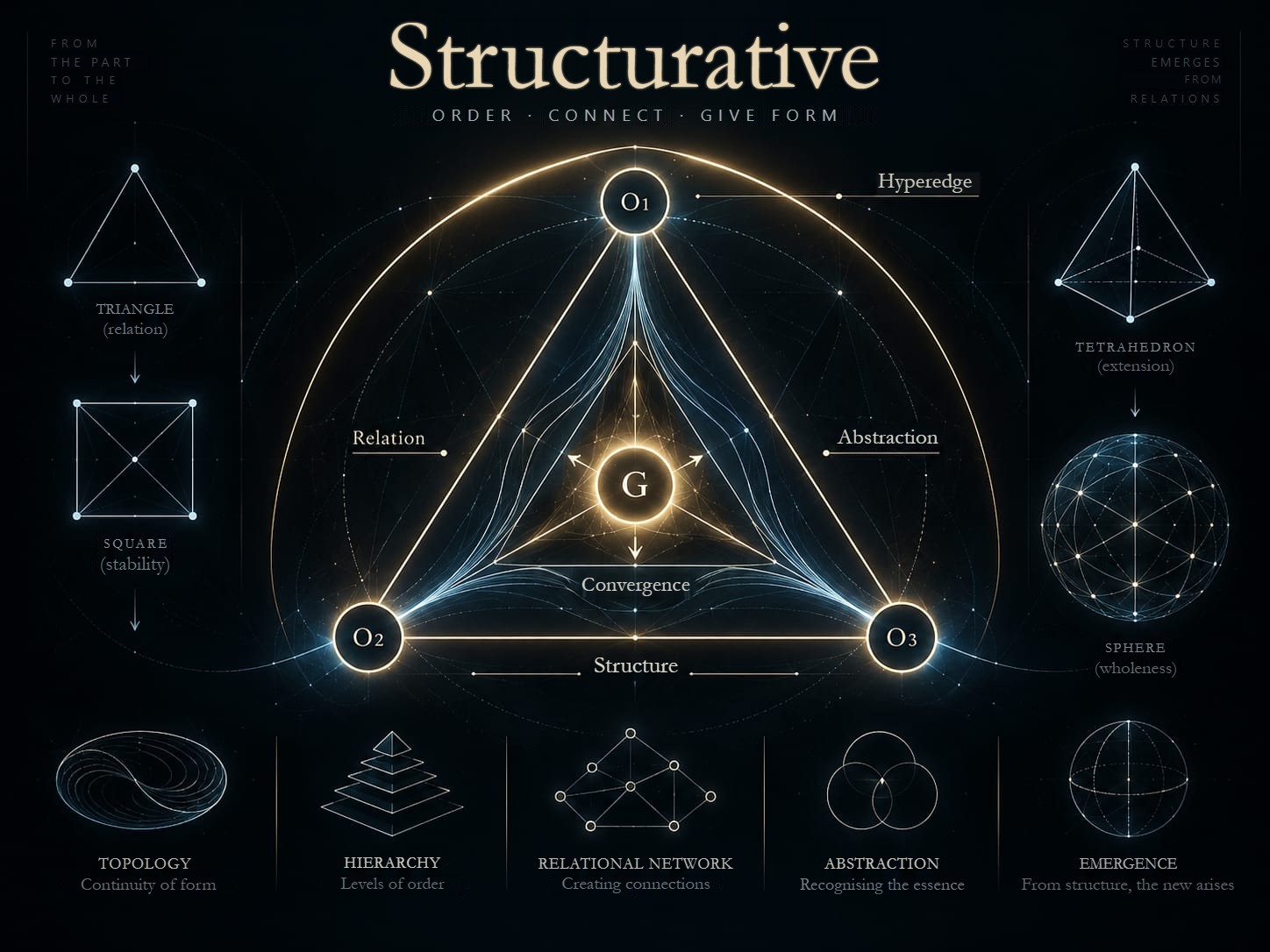
Structurative
Triale: ordering, connecting, giving form. From the triangle to the whole.
studio builtView →
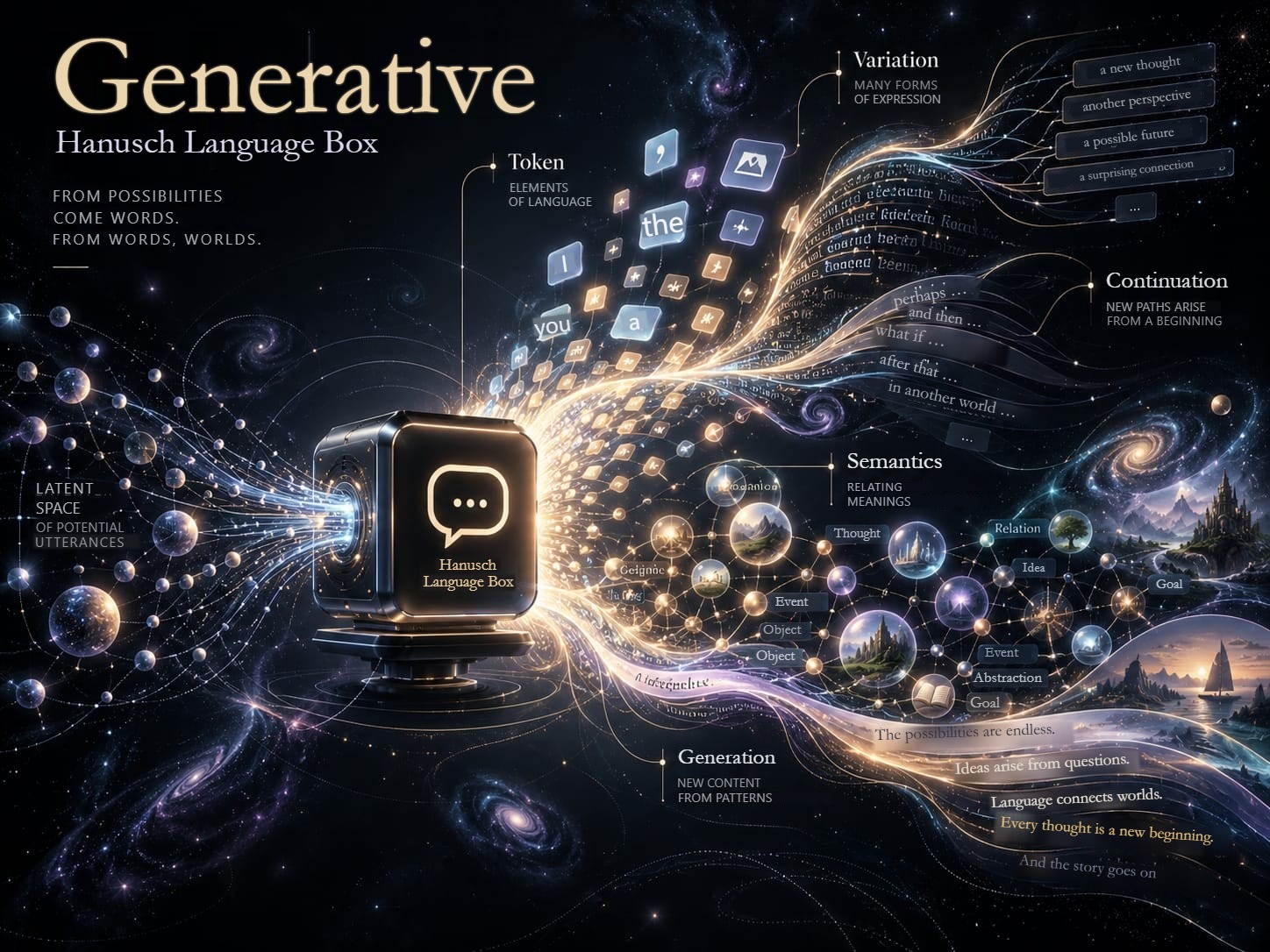
Generative
Hanusch language box: from possibilities, words; from words, worlds.
applied and testedView →
The pictures are diagrams, not measurement data.
Functionative · Dragon D4 Engine
Steer, orchestrate, execute.
The terms
- Input · data, tasks, triggers
- Control · parameters, goals, runtime
- Operator · models, tools, services
- Execution · processes, workflows, actions
- Output · results, artefacts, effect
- Measurement · metrics, status, quality
- Feedback · analysis, adjustment, optimisation
- Core · coordinate, steer, synchronise, execute, optimise
proven in use The engine has already run on several different tasks, delivering a result every time.
Structurative · Triale
Order, connect, give form.
The terms
- O1 · O2 · O3 · three units that observe each other
- G · the centre they converge on
- Relation · the connection between two units
- Hyperedge · a connection across more than two
- Abstraction · recognising what matters
- Convergence · finding the shared centre
- Triangle → square · relation, then stability
- Tetrahedron → sphere · extension, then wholeness
- Topology · hierarchy · continuity of form, levels of order
- Relational network · emergence · connections form, something new emerges
configuration studio built
Generative · Hanusch language box
From possibilities, words; from words, worlds.
The terms
- Latent space · all possible utterances
- Token · the elements of language
- Variation · many forms of expression for one meaning
- Continuation · paths arise from a beginning
- Semantics · relating meanings to each other
- Generation · new content arises from patterns
- Three basic movements · open/close, up/down, left/right
- Core · a few signs and relations carry what is meant
applied and tested In one conversation with a language model, the language box made logical reasoning possible, in our observation remarkably quickly. How precisely it needs to be specified depends on the use case.
Where it runs
C-OS SxA: an operating system with a constitution.
NASGO-ABC runs in the constitutional operating system SxA. “Constitutional” means: the rules are part of every role itself, not a request in the task. The guiding rules: nothing checks itself, nothing is deleted, a human signs off.
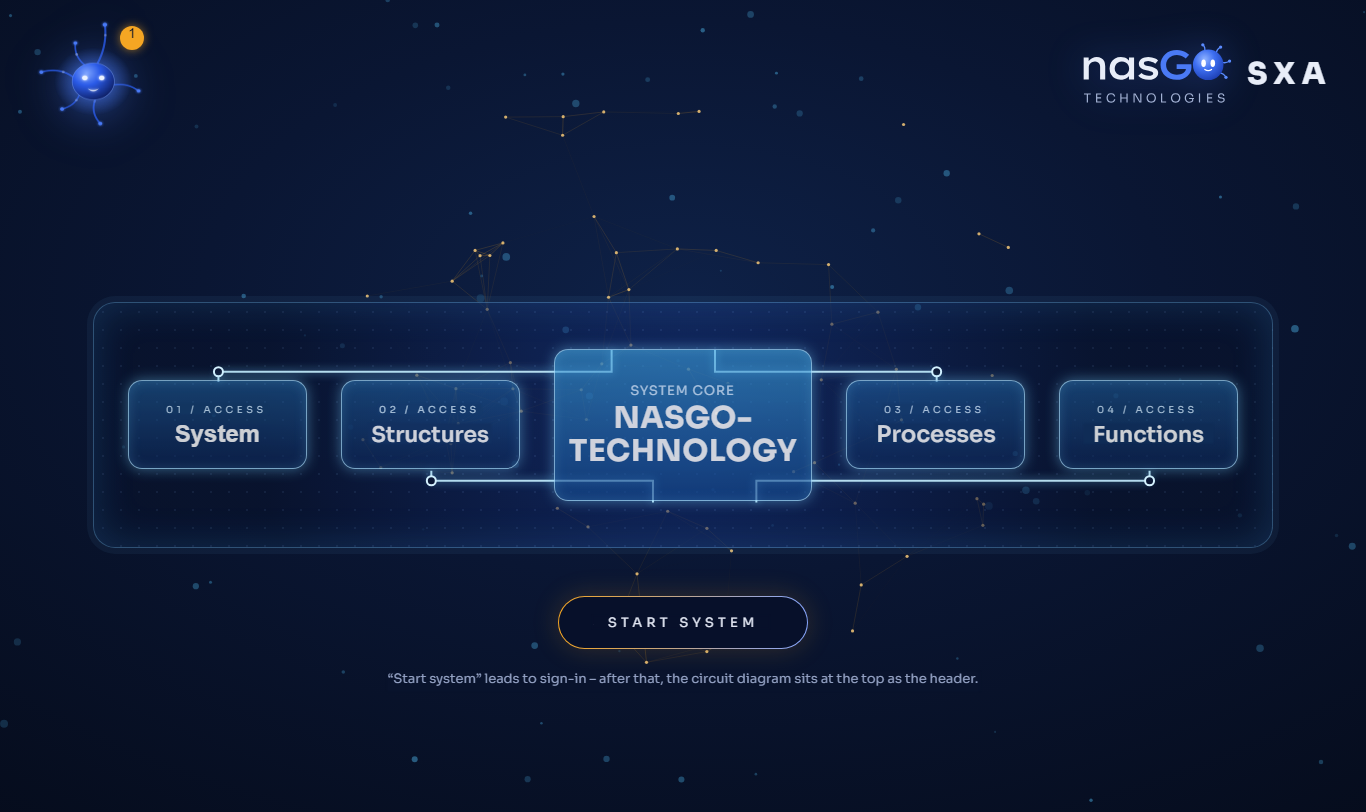
Humboldt · the entry point
The system core with four entry points: system, structures, processes, functions.
Humboldt 2 in progress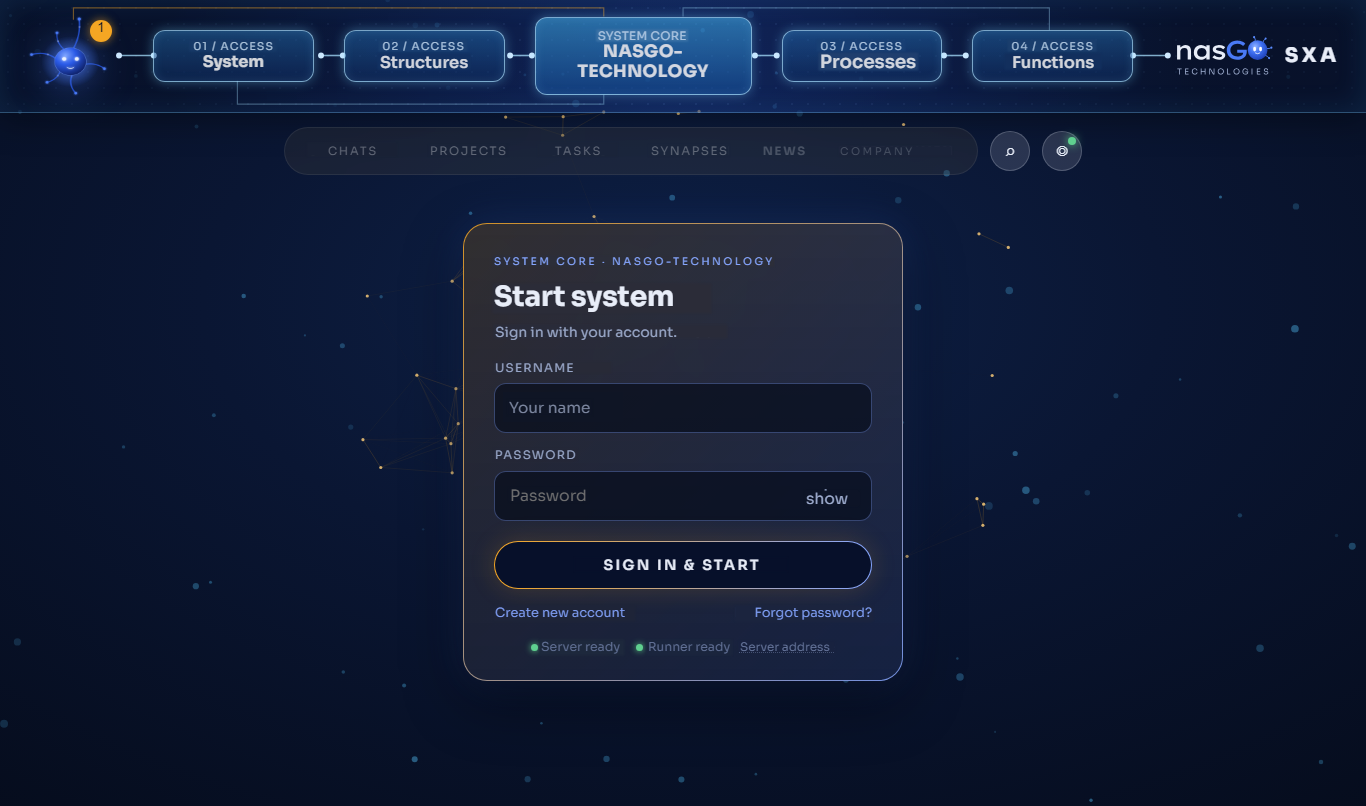
Humboldt · signing in
After the start, the circuit diagram sits at the top; below it are conversations, projects, assignments and synapses.
draft, approvedThe circuit diagram
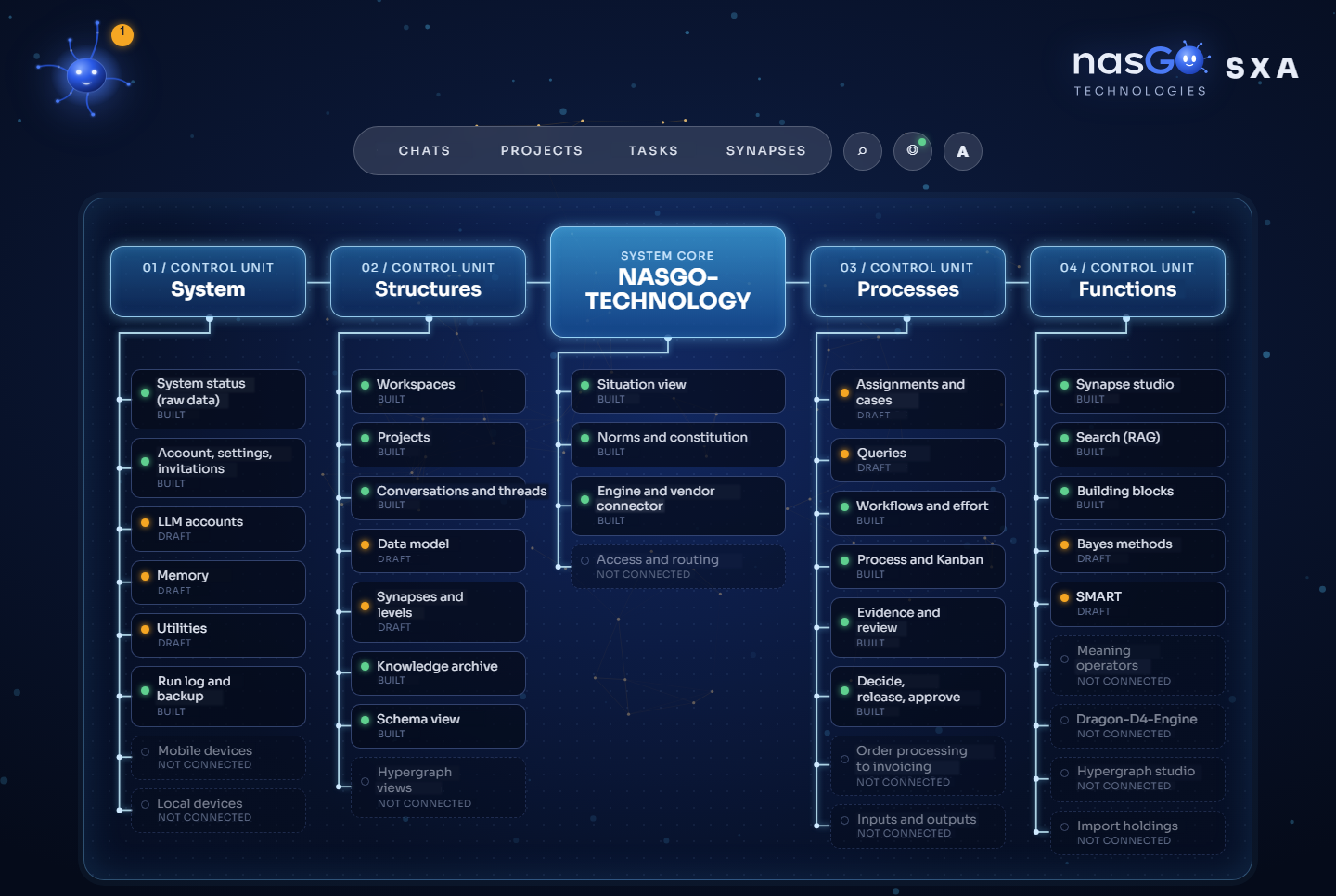
System core with four control units. Every function shows its honest status: built, draft, not yet connected (“connected” means linked into the interface). Simplified view.
The studios
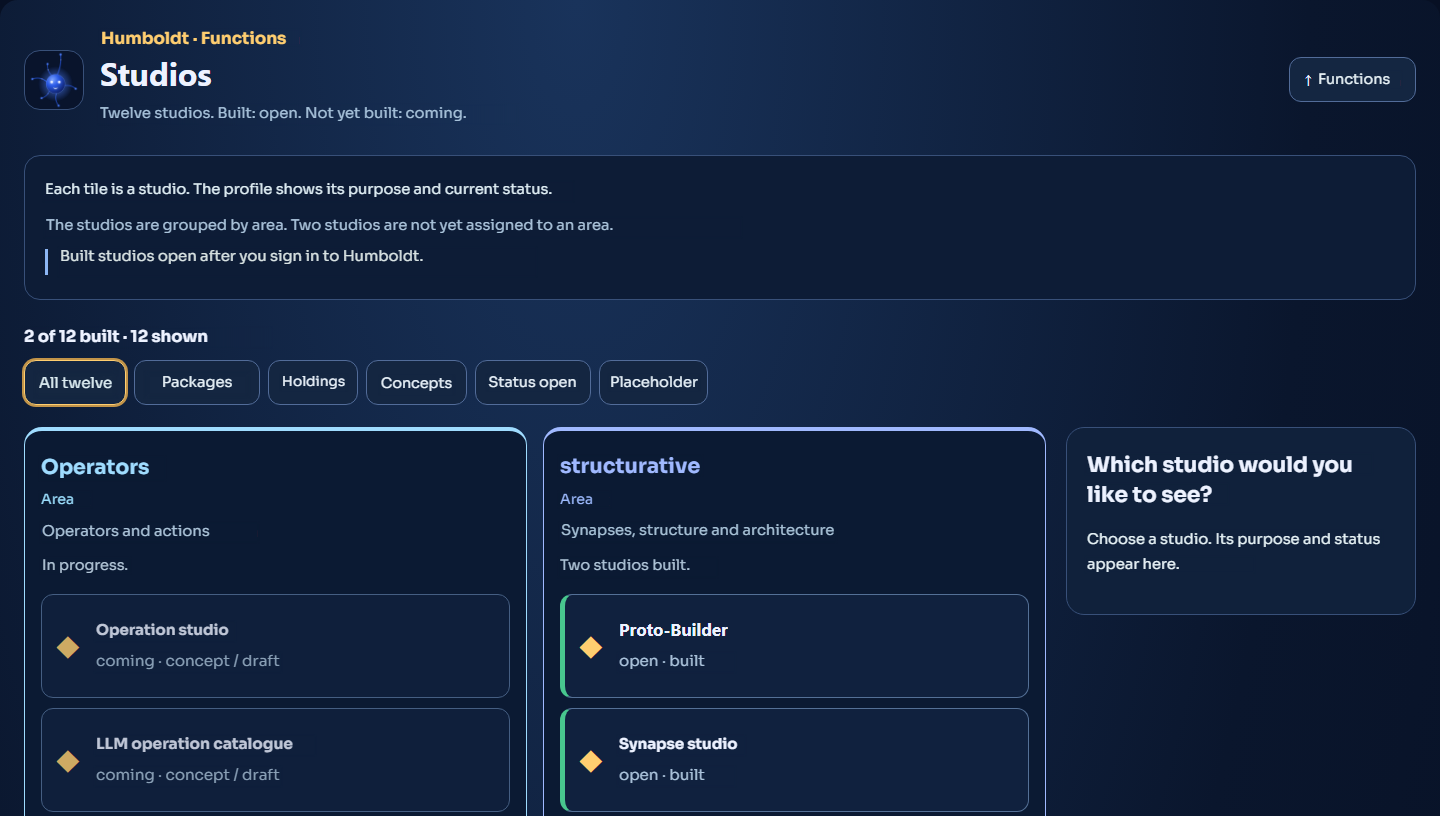
The studio suite: tools in which synapses and structures are built. Two of twelve studios are built (as of 26 October 2026).
Current status
What runs, what is coming.
We claim little and label everything. The early results are encouraging; whether and when the whole brain holds up is what we are investigating.
Status as of 26 October 2026
| Component | Status | What it means |
|---|---|---|
| Synapse | running today | accepting assignments, delivering results, recording every step |
| Cluster | running today | synapses as a team with core, roles and guardian |
| Brain | in development | one lead unit across many clusters |
| Dragon D4 Engine | proven in use | functionative thinking tool, used several times for different tasks |
| Triale | studio built | structurative thinking tool |
| Hanusch language box | applied and tested | generative thinking tool; how precisely depends on the use case |
| C-OS SxA | running on the test bench | the operating system in which everything runs |
| Humboldt 2 | in progress | the face of the system |
| Own server per package | planned | privacy through infrastructure of your own |
| Connected networks | vision | pooling computing load locally and anonymously |
| Full stage | research goal | what a complete artificial brain can achieve |
Outlook: we are currently investigating how an artificial brain can observe itself. We will publish the results under Science.